
Agent tools are powerful. That's exactly why they need sandboxes.
Useful agents call tools. Safe agents validate tool schemas, isolate execution, cap runtime, block network egress, and log every call.

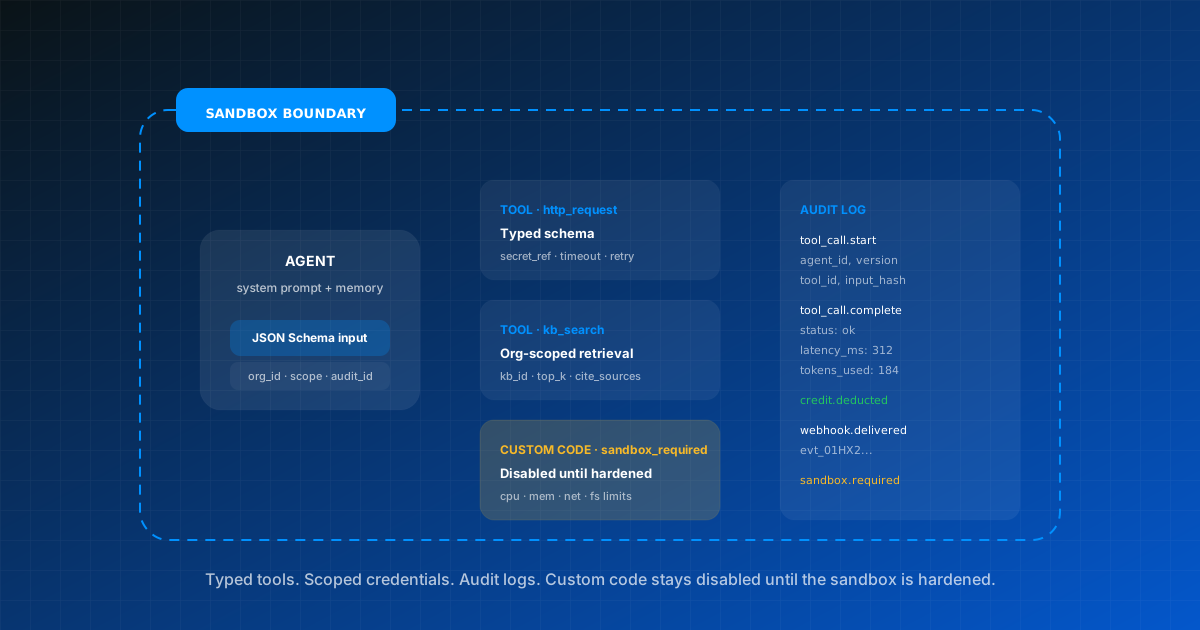
A customer asked me: 'We built an agent that writes and executes code. The demo wowed investors. Should we put it in front of users?' My answer was no. Tools transform agents from chat interfaces into software that reads, writes, searches, and triggers workflows. The same power makes them dangerous. A production agent tool system needs five layers of defense.
5 layers of defense
- Schema validation: Validate tool inputs with typed schemas (Zod, JSON Schema). Reject invalid calls with clear errors so the model can self-correct.
- Secret isolation: Reference secrets by ID, inject at execution time. The model should know a tool exists, never see the credentials that power it.
- Runtime limits: CPU cap (30s), memory cap (256MB), no network egress, read-only fs except /tmp, no process spawning, no host fs access.
- Audit logging: Log every tool call with agent ID, tool name, redacted params, output summary, duration, and status. Essential for incident investigation.
- Approval gates: Classify tools by risk level. High-risk operations (send email, modify data, make payments) require human approval before execution.
Updated:
Ready to ship your AI product?
Start free, route across providers, and see honest cost + readiness from day one.
Related reading
- Product
VeloxAI: the multi-model control plane for product teams
Why product teams need one API for models, agents, RAG, billing, analytics, and readiness instead of another thin provider proxy.
- Models
How to choose the right AI model for every product workflow
A battle-tested model selection framework covering cost, latency, context window, tool calling, vision, and reasoning — with real numbers and a decision matrix.
- Knowledge Base
Building a production RAG system that doesn't lie to users
A production-grade RAG pipeline needs ingestion state, chunk metadata, vector isolation, citations, queue-based indexing, and honest failure modes.